


Snakes lead global dream survey: Turkey's top nightmare revealed
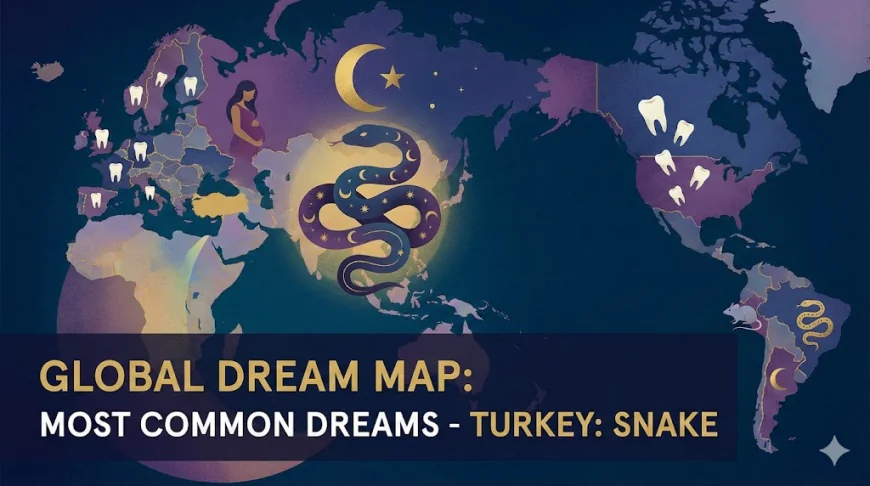
A global study by Mornings.co.uk reveals that snake dreams are the most common in 52 countries, including Turkey, while the West fixates on tooth loss.


By Bilge Türk | Dreams Wisdom
ISTANBUL, TURKEY — A comprehensive global survey by Mornings.co.uk recently identified snake dreams as the most frequent nocturnal theme across 52 nations, with Turkey ranking among the highest for this specific subconscious experience.
The 2026 research, which analyzed Google search data from around the world, highlights a significant cultural divide in human dreaming. While the Middle East, Central Asia, and parts of Africa are dominated by serpent imagery, Western nations—including the United States and the United Kingdom—report an overwhelming preoccupation with the sensation of losing one's teeth.
Global trends in dreaming: Snakes vs. tooth loss
The data suggests that the human subconscious is largely influenced by geographic and cultural environments. According to the study, snake-related queries were the most searched dream interpretations in 52 different countries. In contrast, "teeth falling out" was the leading theme in 17 countries, primarily located in North America and Western Europe.


Regional variations provide further insight:
-
Europe and South America: While France and Germany frequently search for "pregnancy" dreams, Peruvians are more likely to dream of "mice."
-
The Middle East: Turkey’s neighbors, such as Saudi Arabia and Iraq, show a higher frequency of "marriage" dreams, while Greece and Lebanon share Europe’s interest in "pregnancy."
-
Africa: Themes vary from "money" and "marriage" to "sexuality," particularly in Nigeria.


The psychological codes of serpents and teeth
Psychologists argue that these recurring themes act as mirrors to a society's collective mental state. Modern dream theorists suggest that dreaming of snakes often symbolizes hidden anxieties or the fear of betrayal. In developing nations, this imagery frequently correlates with "survival instincts" and "external threats."
Conversely, the prevalence of tooth loss dreams in developed Western nations is often linked to "personal appearance," "loss of control," or "anxiety regarding aging." Experts at Mornings.co.uk noted that these dreams reflect a focus on self-image and social standing within Western cultural frameworks.
Islamic interpretations of snake dreams
Given Turkey's position at the top of the "snake dream" list, the religious and traditional dimensions of this imagery remain highly relevant. Great Islamic scholars have provided extensive and varied interpretations for encountering a serpent in the world of
Insights from Ibn-i Sirin and Nablusi
Ibn-i Sirin: Generally interprets the snake as a "hidden enemy." The size and ferocity of the snake represent the strength of the adversary. Killing a snake in a dream is seen as a sign of victory over one's rivals or personal struggles.
Nablusi: Views the snake as a deceptive and cunning enemy. He distinguishes between domestic and distant threats; if the snake is inside the home, the enemy is a family member or neighbor. If it is outside, the threat comes from a stranger or a distant acquaintance. A large snake may also symbolize a person of great power or a high-ranking official.
Perspectives of Imam Jafer Sadik and Kirmani
Imam Jafer Sadik (a.s): He categorized snake dreams into ten distinct meanings: an enemy, livelihood, a woman, a child, a flood, a leader, strength, victory, and a state official. The context of the dream determines which of these applies.
Kirmani: Focused on the material outcomes of such dreams. Seeing the meat or blood of a snake is interpreted as gaining wealth or spoils from an enemy’s defeat.
Seyyid Suleyman: Emphasized the importance of color. A black snake represents a particularly dangerous and hilekar (deceptive) foe, while a white snake may symbolize a weak but sinsi (sneaky) rival.
Views from Hz. Danyal (a.s) and Molla Cami
Hz. Danyal (a.s): He interpreted a wild snake as a foreign enemy and a domestic snake as a person from within one's own household.
Molla Cami: Saw the snake as a symbol of power. He suggested that if a person is not afraid of the snake in their dream, it indicates they will attain high status and great strength in their waking life.
Modern Ulema and the role of fear
Contemporary Islamic scholars often integrate these traditional views with a focus on the dreamer's emotional state. They suggest that the frequent appearance of snakes in regions like Turkey may also stem from a cultural subconscious that associates the creature with both danger and spiritual transformation.
The 2026 data confirms that whether viewed through a psychological lens or traditional wisdom, the snake remains the world’s most potent symbol of the unknown.
What's Your Reaction?
 Like
0
Like
0
 Dislike
0
Dislike
0
 Love
0
Love
0
 Funny
0
Funny
0
 Wow
0
Wow
0
 Sad
0
Sad
0
 Angry
0
Angry
0

Editorial Desk |DreamWisdom.com is a comprehensive knowledge and editorial platform focused on dreams, dream interpretation, and dream science. The platform explores religious, psychological, cultural, and scientific perspectives, bringing together classical dream traditions with modern analytical approaches.



















Comments (0)