Decoding the symbolism of weaving in dreams: Journeys and life
Dreaming of weaving serves as a profound metaphor for life expectancy, upcoming travels, and the resolution of social conflicts in Islamic tradition.
 editor


BY BILGE TÜRK | DREAMS WISDOM
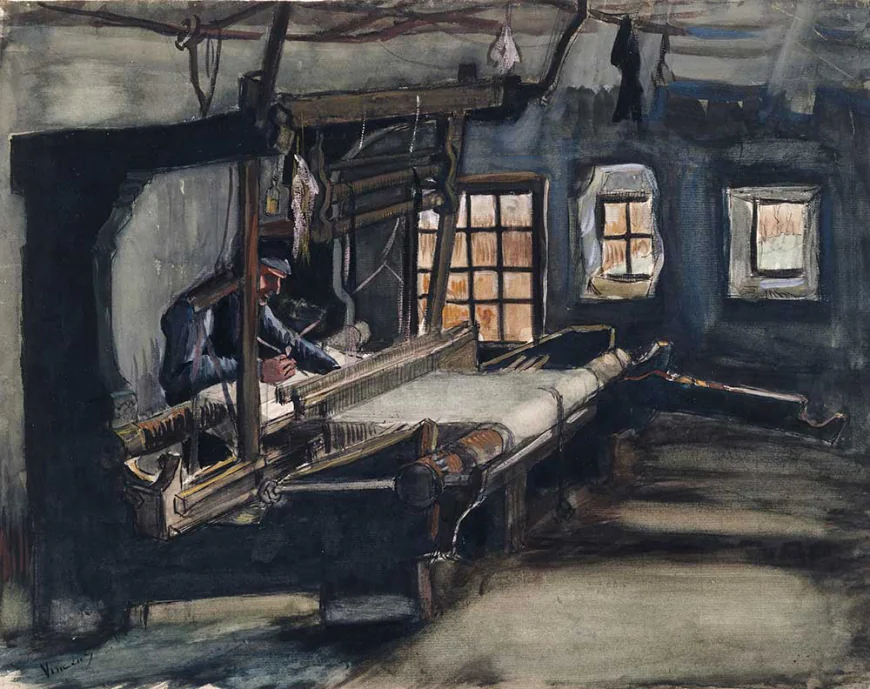
ANKARA, TÜRKİYE — Dreaming of weaving or witnessing the operation of a loom is considered one of the most intricate symbols in the realm of dream interpretation, acting as a spiritual "map" of the dreamer's lifespan, upcoming physical journeys, and the quality of their social relationships.
Historically, the act of weaving—bringing disparate threads together to create a unified fabric—is interpreted by scholars as a sign of reconciling with enemies or putting the fragmented pieces of one's life back into a useful order. However, the nuances of the dream, such as the material used, the completion of the fabric, or the act of cutting the cloth, can pivot the meaning from a herald of prosperity to a somber warning about the "ending of days" or the interruption of one's deepest desires.
Molla Cami and Nablusi: The duality of lifespan and travel
According to the classical interpretations of Molla Cami and Nablusi, the act of weaving is intrinsically linked to the passage of time. In many contexts, weaving can signify the shortening of one's life or that the majority of one's days have already passed. Conversely, it can also represent a "middle-class" existence or an expansion of one's current livelihood, suggesting that the dreamer is currently building their future security.


The theme of travel is dominant in these interpretations. Seeing oneself weaving clothes is a direct indicator of a long-distance journey. Furthermore, if a dreamer sees themselves preparing a specific area or "place" for weaving, it is a sign that they are mentally and logistically preparing for a significant departure in the waking world. Interestingly, Nablusi also suggests that weaving fabric can sometimes serve as a metaphor for intimacy and affection between spouses.
Ibn Sirin and Kirmani: The significance of material and completion
Ibn Sirin and Kirmani focus heavily on the practical and material aspects of the dream. Ibn Sirin equates the "weaver" to a person destined for travel and suggests that collecting rope or thick string is a clear omen of an upcoming departure. However, he warns that cutting an already woven garment is a negative sign, indicating that the dreamer's work or current projects may end in hostility or enmity.
Kirmani provides a specific warning regarding the quality of materials. Weaving with linen instead of silk is interpreted as a sign of "evil" or a decline in moral/social quality. The state of completion is also vital:
-
Finished Work: Completing a garment and then cutting it signifies a successful journey and the finalization of a task.
-
Unfinished Work: Seeing a fully woven but uncompleted garment suggests that the dreamer's current work or goals will remain unfinished or stalled.
Seyyid Suleyman and Al-Salimi: Grief, death, and mental occupation
The interpretation of weaving takes a more psychological and somber turn in the works of Seyyid Suleyman and Al-Salimi. Abu Said al-Wa'iz, a scholar cited by Suleyman, offers a striking interpretation: a person who sees themselves making thread and weaving until the task is finished may be approaching the end of their life, as it symbolizes completing their "worldly duties".
Al-Salimi interprets the act of weaving through the lens of mental health and emotional states. He suggests that weaving in a dream often represents grief, anxiety, and a mind occupied with worry. In this framework:
-
Finishing the cloth: Represents relief and the end of these anxieties.
-
Leaving it unfinished: Suggests that the dreamer's troubles and mental burdens will persist.
-
Group Weaving: Seeing multiple people weaving in one's home is interpreted as a precursor to a conflict or fight with relatives.
Social status and the tools of the trade: The Ihya perspective
The Ihya interpretation provides a unique look at the tools used in weaving. The "weaving comb" (dokuma tarağı) is seen as a symbol of marriage; for a young girl, it signifies a husband, while for a bachelor, it represents a dignified woman capable of enduring life's hardships.
Additionally, the figure of the weaver in a dream is compared to a "wall builder" (duvar ustası)—someone who constructs and stabilizes. It can also represent a person who is exhausted by frequent travel necessitated by their profession. For those in legal or social trouble, the act of weaving fabric is a positive sign of "escaping from prison" or finding protection from external dangers.
Practical omens: Arrival of guests and public blame
Diyanet's interpretation focuses on the social environment of the dream. If you are weaving at a loom or in a factory, it predicts a journey for you or a relative. However, if there are other people present at the loom with you, it is an omen that a beloved person will soon arrive from a distant location.
Finally, Jabir Maghribi offers a social warning. To engage in the business of weaving in a dream may indicate that a dispute or hostility will arise between the dreamer and the public. While the dreamer's situation may eventually improve, they should be prepared for public criticism or blame.
| Scenario | Primary Meaning | Scholarly Source |
| Weaving clothes | A distant journey | Molla Cami, Ibn Sirin |
| Finishing the cloth | Death (spiritual) or relief from anxiety | Abu Said al-Wa'iz, Al-Salimi |
| Cutting the cloth | Interruption of work or hostility | Molla Cami, Kirmani |
| Group weaving at home | Conflict with relatives | Al-Salimi |
| Weaving with others | Arrival of a loved one | Diyanet |
In summary, weaving in a dream is a complex symbol of construction and destination. Whether it heralds the excitement of a new journey, the resolution of a family feud, or a reminder of the finite nature of time, it encourages the dreamer to look closely at the "threads" they are currently handling in their waking life.